
Retinol Cream in Pakistan: Is It Safe? A Dermatologist's Honest Answer
The Most Common Question I Get About Retinol
'Doctor, I have heard Retinol is very strong — is it safe for my skin?'
I hear this almost every week in clinic. Retinol has a reputation in Pakistan for being aggressive, irritating, and something only for people with thick skin. Let me address this directly: Retinol is safe for Pakistani skin when used correctly. It is also one of the most clinically proven anti-ageing and acne-treating ingredients that exists.
In this guide, I will explain exactly what Retinol does, who should use it, and — crucially — how to start without the irritation that gives it its fearsome reputation.
What is Retinol and Why is it So Effective?
Retinol is a derivative of Vitamin A and one of the most extensively researched skincare ingredients in dermatology. It works by binding to retinoid receptors in skin cells, triggering a cascade of effects:
- Accelerates cell turnover — replaces older, pigmented cells with newer, fresher ones faster than your skin would naturally
- Stimulates collagen production — directly increases collagen synthesis, reducing fine lines and firming skin
- Unclogs pores — prevents dead skin cells from accumulating inside pores, reducing acne
- Fades hyperpigmentation — the accelerated cell turnover gradually replaces pigmented cells
Is Retinol Safe for Pakistani Skin?
Yes — with appropriate formulation and proper introduction. The concerns about Retinol usually come from one of two problems:
- Using too high a concentration too quickly — jumping to a high-percentage Retinol serum as a beginner causes redness, dryness, and peeling
- Not using SPF — Retinol increases skin sensitivity to UV rays; without SPF, it causes photodamage rather than treating it
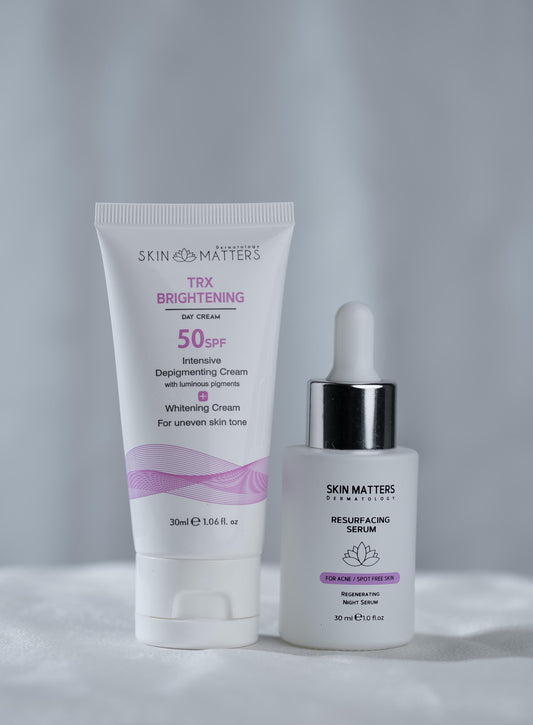
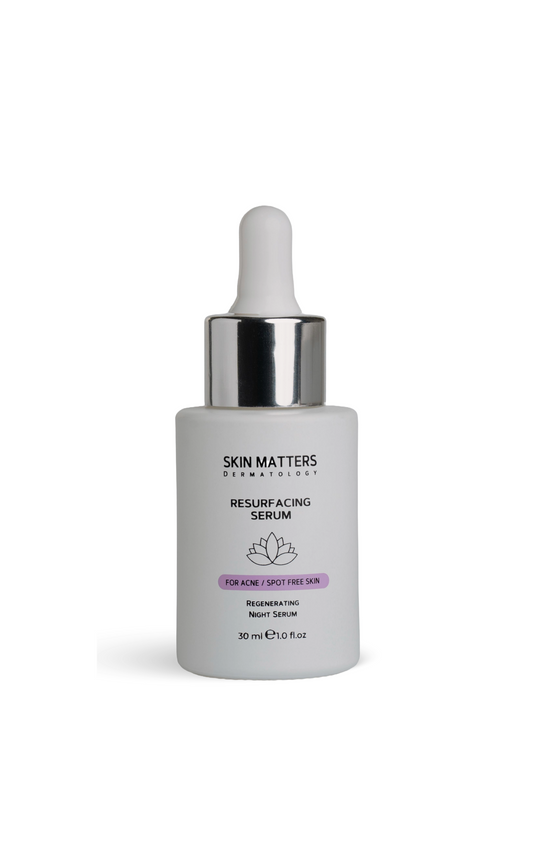
The Skin Matters Retinol Resurfacing Serum is formulated at a beginner-friendly concentration specifically to minimise irritation while still delivering results. It is further buffered with Niacinamide and Hyaluronic Acid — two ingredients that calm any potential irritation and maintain skin hydration.
How to Start Using Retinol Without Irritation
- Start slowly — use Retinol 2 nights per week for the first 2 weeks, then gradually increase
- Apply to dry skin — cleanse, wait 5–10 minutes for skin to dry completely, then apply. Wet skin increases absorption and potential irritation.
- A pea-sized amount is enough for the entire face. More is not better.
- Night use only — Retinol is photosensitive; always use at night
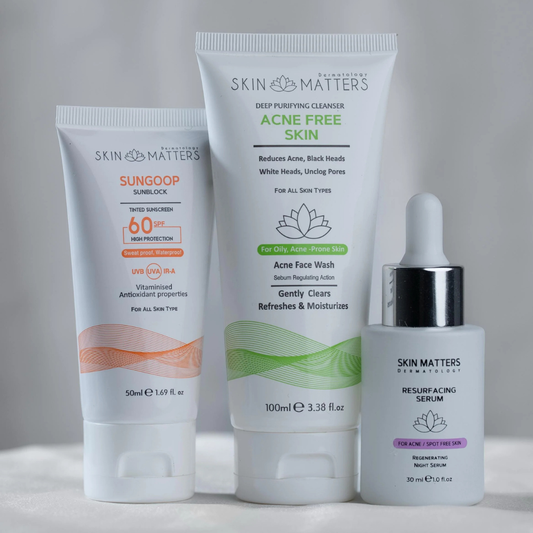
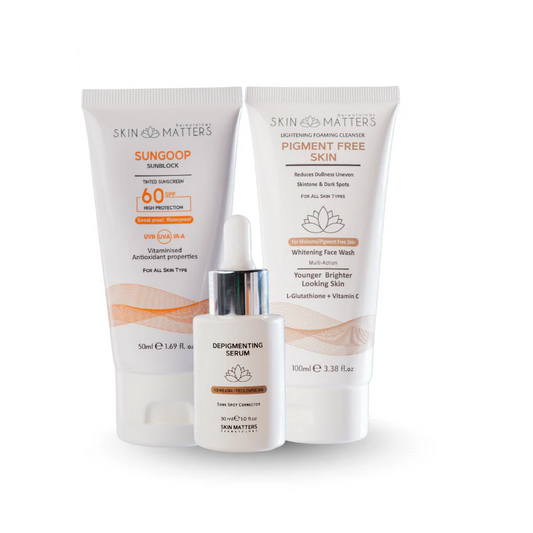
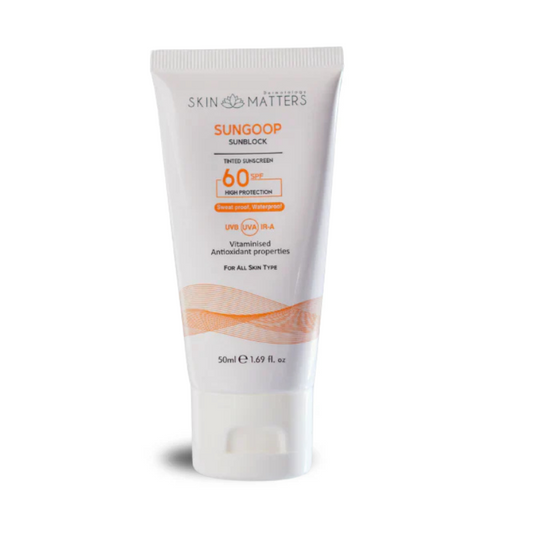
- Always SPF 50 next morning — non-negotiable. Sungoop SPF 50 every morning when using Retinol.
- Be patient — initial purging (a brief increase in breakouts) can occur in week 2–4. This is normal and temporary.
Frequently Asked Questions
- What is the price of Retinol serum in Pakistan?
- The Skin Matters Retinol Resurfacing Serum is priced at Rs. 2,600 with free delivery on orders above Rs. 3,000.
- Can I use Retinol if I have acne?
- Yes. Retinol is highly effective for acne — it prevents pore clogging, reduces oil production, and fades the marks left by past breakouts. It is one of the most recommended acne treatments in dermatology.
- How long before Retinol shows results for anti-ageing?
- Skin texture improvement is noticeable within 4 weeks. Significant reduction in fine lines and wrinkles requires 3–6 months of consistent use.
- Can pregnant women use Retinol?
- No. Retinol and all Vitamin A derivatives are not recommended during pregnancy. Consult your dermatologist for pregnancy-safe alternatives.
- Is retinol safe for Pakistani skin in summer?
- Yes, with strict SPF 50 use every morning. In extreme heat, some patients prefer to use Retinol every other night in summer and daily in winter. Always apply Sungoop the following morning.
Written by Dr. Attiya Tareen, Dermatologist, Rawalpindi. Shop Retinol Resurfacing Serum →